

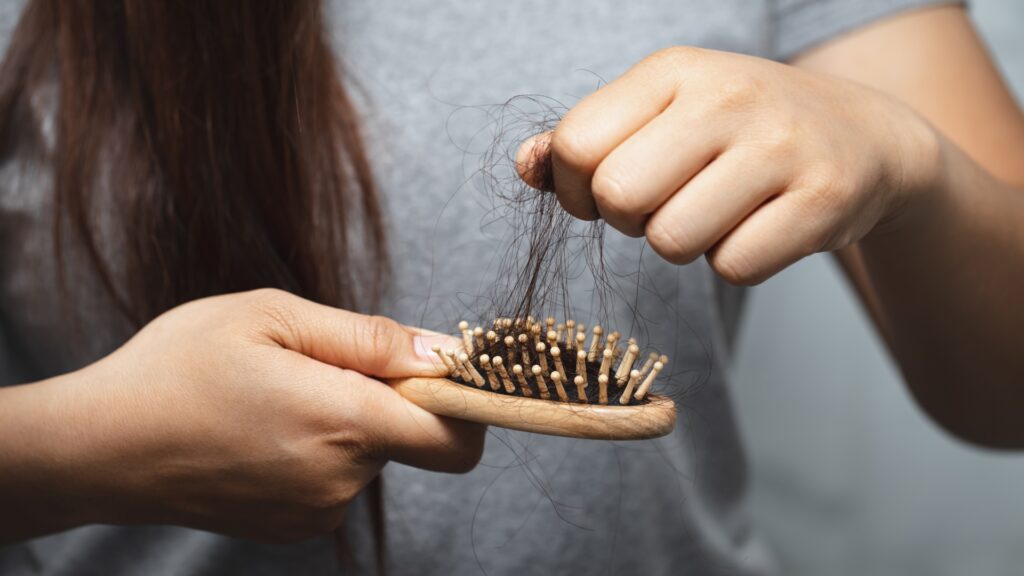
Hair Loss in Women: Causes, Types, and Treatments That Work
Understanding the root cause is the first step to effective treatment — here’s what the science says.
Hair loss in women is far more common than many people realise. According to the American Hair Loss Association, women represent around 40% of all Americans experiencing hair loss, yet it remains significantly under-discussed, leaving many women unsure of the cause or where to turn.
The reality is that female hair loss has multiple possible causes, from genetics and hormones to stress, nutritional deficiencies, and styling habits and the right treatment depends entirely on identifying which factor is at play. This guide covers the most common causes of hair loss in women, how to tell them apart, and the clinically proven treatments that can help restore fuller, healthier hair.
Note: shedding 50–100 hairs per day is completely normal. It’s when shedding consistently exceeds this, or you notice widening of your part, a thinner ponytail, or visible scalp, that treatment is worth exploring.
Common Causes of Hair Loss in Women: Genetics, Hormones, Stress, and More
Genes, which determine your height and eye color, can also be the root cause of hair loss. This is called female pattern hair loss, or female androgenetic alopecia — Women typically experience
his as a gradual, diffuse thinning across the scalp — particularly at the crown and widening part — rather than the receding hairline pattern seen in men. It affects approximately 30 million American women and can begin as early as the 20s or 30s.
While thinning hair is easier to hide than bald spots, it usually means women are not viable candidates for hair transplants. Generally, about 50 percent of balding women do not have a large enough donor area to take hair from.
Hormonal Shifts and Stress-Related Hair Shedding
Another factor in women’s hair loss is the delicate balance of hormones. A condition called telogen effluvium causes large amounts of hair shedding, driven by hormonal imbalances. Hair grows in cycles, and telogen effluvium speeds up the growth and shedding cycles, leaving more follicles in the telogen, or dormant, phase, which causes rapid hair loss.
This condition typically affects more women than men, and it can occur because of stress, major surgery, and childbirth, for example. But telogen effluvium can spring up at any time, and then go away, all depending on the hormonal balance in the body. Generally speaking, women experience periods of hair loss during major hormonal shifts in life, typically in their 30s, 50s, and after menopause.
Postpartum hair loss is one of the most common forms of telogen effluvium — many women experience significant shedding in the months following childbirth as hormone levels normalise, but this is usually temporary.
Traction Alopecia and Styling-Related Hair Loss
Another common condition that affects women is traction alopecia, which occurs when hair is pulled out from the scalp. Think about plucking an eyebrow – pulling out the occasional hair won’t do much harm, but constantly plucking the same hairs over the course of many years will affect the follicles’ ability to grow hair, or new hair will simply grow in shorter or thinner. Traction alopecia is common after years of wearing tight hair styles such as weaves, corn rows, and extremely tight pony tails.
PCOS and Hormonal Imbalance
Polycystic ovary syndrome (PCOS) is one of the most common hormonal conditions affecting women — and one of the most overlooked causes of hair thinning. PCOS elevates androgen levels (including DHT, or dihydrotestosterone), which can miniaturise hair follicles and shorten the growth cycle in a similar way to male pattern baldness. Women with PCOS may notice thinning at the temples or crown alongside other symptoms like irregular periods or acne. Treatment typically involves hormonal management alongside topical hair loss therapies.
Thyroid Disorders
Both an under active thyroid (hypothyroidism) and an overactive thyroid (hyperthyroidism) can disrupt the hair growth cycle, leading to diffuse shedding across the scalp. Thyroid-related hair loss is often gradual and may go unnoticed until shedding becomes significant. It is reversible in many cases once the underlying thyroid condition is diagnosed and treated — which is why a blood test is often the first step when hair loss appears alongside fatigue, weight changes, or temperature sensitivity.
Nutritional Deficiencies
Low levels of iron, ferritin (stored iron), vitamin D, zinc, and protein are commonly linked to hair thinning in women. Iron deficiency in particular is frequently found in pre-menopausal women and can cause telogen effluvium-like shedding even without full anaemia. If hair loss is accompanied by fatigue, brittle nails, or dietary restriction, a blood panel checking these levels is a worthwhile starting point before beginning any topical treatment.
Proven Treatments for Hair Loss in Women
Women experiencing hair loss have more effective, evidence-based options available today than ever before. The right treatment depends on the underlying cause — but for the most common forms of female hair loss (androgenetic alopecia and telogen effluvium), two treatments have the strongest clinical evidence and FDA clearance: minoxidil and low-level light therapy (LLLT). Many hair restoration specialists recommend using both together for better results.
If you see hair starting to thin or begin experiencing hair loss, there are options available; the two treatment options backed by clinical research and testing, and FDA clearance, are Minoxidil (the active ingredient in GroWell’s topical solution) and low-level light therapy (LLLT), also commonly known as Red Light Therapy.
Red Light Therapy vs. Minoxidil: How They Work Differently
Though they work differently, both are proven to stimulate new, fuller hair growth. Red light therapy (LLLT) works through photobiomodulation — stimulating follicles at the cellular level using specific red wavelengths (typically 655nm), improving scalp circulation and encouraging follicles back into the active growth phase. It has no known side effects and is FDA-cleared for both men and women. It’s also considered a more convenient treatment, easily delivered in short treatments a few days a week, using such products as the GroWell cap for hair growth. For the first six months, users receive 20 to 25 minutes of light therapy every other day. After this initial treatment period, they only need to receive LLLT once or twice a week to maintain growth.
In contrast, minoxidil requires twice-daily application indefinitely — results reverse if use is stopped. However, for women who want maximum results, combining minoxidil with red light therapy addresses hair loss through two different biological mechanisms simultaneously, and clinical evidence supports this combination approach.
Why Follicle Health Matters for Hair Regrowth
Minoxidil and Red Light Therapy/LLLT are realistic choices for women who experience hair thinning or loss. However, treatment is most effective when started early. Once a follicle has been permanently damaged, it cannot be revived — which is why acting at the first signs of thinning gives the best chance of meaningful regrowth. Both LLLT and minoxidil work by supporting follicle health and activity, not by regenerating follicles that are already dormant.
Choosing Proven, FDA-Cleared Solutions
While many over-the-counter shampoos, gels, supplements, and certain food items claim to assist in hair growth, these products often aren’t verified by clinical testing or FDA clearance. The GroWell Hair Growth Cap is a home-use, hands-free way to see what Red Light Therapy can do for your hair loss that’s FDA-Cleared, safe, proven effective and comes with a 12-month Money Back Guarantee. What do you have to lose except more hair?
Hair loss can feel overwhelming—but understanding the cause is the first step toward real results. With the right tools and a consistent approach, many women are able to restore thicker, healthier hair over time.
Frequently Asked Questions About Women's Hair Loss
Is hair loss normal for women?
Yes. Hair loss is extremely common in women, especially during periods of hormonal change, stress, or aging. While shedding a small amount of hair daily is normal, noticeable thinning, widening of the part, or increased shedding may signal an underlying issue that can often be addressed with the right treatment.
What are the most common causes of hair loss in women?
The most common cause of hair loss in women is female pattern hair loss (androgenetic alopecia), affecting around 30 million American women. Other frequent causes include telogen effluvium (stress or postpartum shedding), thyroid disorders, PCOS, iron or vitamin D deficiency, and traction alopecia from tight hairstyles. Identifying the specific cause is essential for choosing the right treatment.
Can stress really cause hair loss in women?
Yes. Physical or emotional stress can push hair follicles into a resting phase, leading to a condition called telogen effluvium. This often results in increased shedding a few months after the stressful event. The good news is that stress-related hair loss is usually temporary and can improve once the underlying stressor is addressed.
What hormone causes hair loss in women?
DHT (dihydrotestosterone) is the primary hormonal driver of female pattern hair loss — it miniaturises hair follicles over time, shortening the growth cycle. Declining oestrogen levels (particularly during menopause) also reduce the hair follicle’s protection against DHT. Thyroid hormones, progesterone, and elevated androgens from PCOS can all cause additional disruption to the hair growth cycle.
What does female pattern hair loss look like?
Unlike men, women typically experience diffuse thinning across the scalp rather than a receding hairline. Common signs include a widening part, reduced ponytail thickness, and thinning at the crown while the frontal hairline remains intact.
Does red light therapy work for women’s hair loss?
Yes. Red light therapy—also known as low-level light therapy (LLLT)—has been clinically shown to stimulate hair follicles, improve blood flow to the scalp, and support thicker, healthier hair growth in women. It’s non-invasive, drug-free, and well-tolerated, making it a popular option for female hair thinning.
In two peer-reviewed clinical studies conducted by Apira Science (published in Lasers in Surgery and Medicine), 100% of treated participants regrew hair — with the GroWell device delivering red and near-infrared light at 655nm. A 2026 prospective trial also confirmed sustained improvement in hair count and thickness in women with androgenetic alopecia after 12 months of consistent LLLT use.
Can women use red light therapy and minoxidil together?
Absolutely. Many hair restoration specialists recommend combining red light therapy and minoxidil treatments for better results. Red light therapy can enhance scalp circulation and follicle activity, while topical minoxidil supports regrowth by prolonging the hair growth phase. Using them together often leads to more noticeable improvement than either treatment alone.
How long does it take to see results from hair regrowth treatments?
Hair regrowth takes time. Most women begin to notice reduced shedding within 8–12 weeks, with visible improvements in thickness and density typically appearing after 3–6 months of consistent treatment.
Continued use is essential — both LLLT and minoxidil work on an ongoing basis, and stopping treatment typically leads to regression. In Apira Science’s clinical studies, 100% of treated participants showed measurable hair regrowth within 16 weeks of consistent use.
Is women’s hair loss reversible?
In many cases, yes—especially when the cause is identified early. Hormonal imbalances, stress-related shedding, and nutritional deficiencies often respond well to targeted treatments. Genetic hair thinning can also be managed effectively with consistent, long-term therapy.
When should a woman see a doctor for hair loss?
If hair loss is sudden, severe, or accompanied by other symptoms like fatigue, weight changes, or scalp irritation, it’s a good idea to consult a healthcare provider or dermatologist. A professional evaluation can help pinpoint the cause and guide the most effective treatment plan.