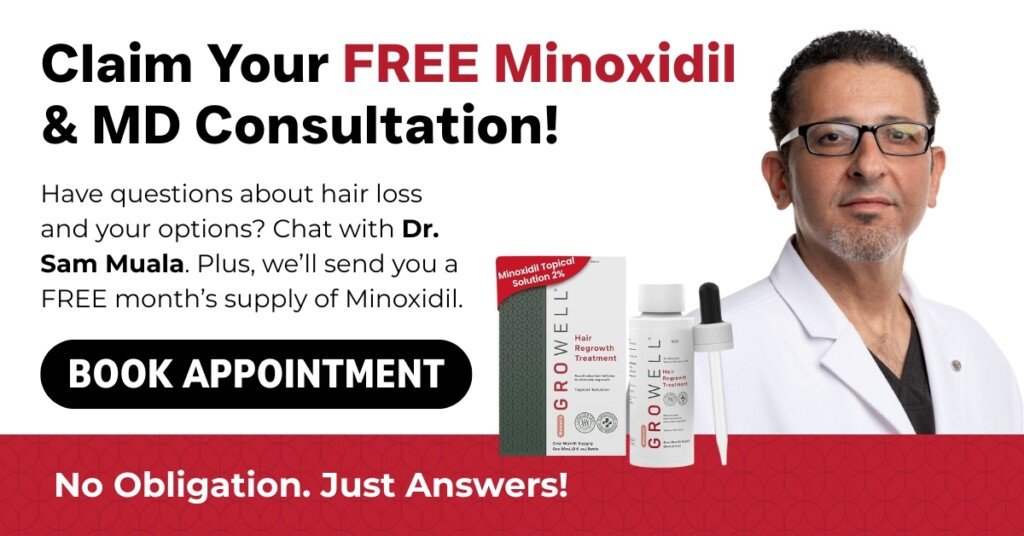


Hair loss can feel overwhelming not just emotionally, but practically. With so many treatment options available, it’s hard to know where to start or what truly works. To help bring clarity, we sat down for a Q&A with Dr. Samer Muala, who regularly consults with patients exploring everything from medications and procedures to red light therapy.
Below, Dr. Muala walks through the full spectrum of hair loss solutions — and explains why red light therapy has earned a legitimate place among them.
1. What are the most common causes of hair loss you see in patients?
The majority of patients I see are dealing with genetic hair loss, also known as androgenetic alopecia. Hormonal changes, stress, nutritional deficiencies, medical conditions, and certain medications can also contribute. Often, hair loss isn’t caused by just one factor, which is why treatment plans should be individualized.
2. What treatment options are available for people experiencing hair loss?
Patients generally have several categories of options:
Topical treatments like minoxidil
Oral medications prescribed by a physician
Non-invasive therapies, such as red light therapy
Procedural options, including PRP injections or hair transplantation
Each option has its own benefits, risks, and commitment level.
3. Are medications always necessary?
Not always. Medications can be effective for some patients, but they aren’t right for everyone due to side effects, medical history, or personal preference. Many patients specifically ask for non-drug alternatives, which is where red light therapy becomes an appealing option.
4. Where does red light therapy fit into the treatment landscape?
Red light therapy is a clinically proven, non-invasive option that can be used on its own or alongside other treatments. It works by stimulating hair follicles at the cellular level, improving circulation and encouraging follicles to remain in — or return to — the growth phase.
5. Is red light therapy actually backed by science?
Yes. Low-level light therapy (LLLT) has been studied for years and is FDA-cleared for treating genetic hair loss in both men and women. When used correctly and consistently, it can support thicker, healthier hair growth over time.
6. Who is a good candidate for red light therapy?
Red light therapy is especially effective for patients in the early to moderate stages of hair thinning, but I also recommend it to patients who want to maintain results after other treatments. It’s a great option for people seeking something safe, drug-free, and easy to use at home.
7. Can red light therapy be combined with other treatments?
Absolutely. In fact, combination therapy is very common. Red light therapy often complements topical treatments, supplements, or medical procedures by supporting scalp health and follicle function.
8. How important is consistency with red light therapy?
Consistency is everything. Hair growth is slow, and follicles need repeated stimulation over time. Most disappointing outcomes I see with red light therapy come from patients who didn’t follow the recommended schedule or stopped too early.
9. What should patients realistically expect in terms of results?
This is not an overnight solution. Most patients notice early changes within three to four months, with more visible improvements around six months or longer. Red light therapy rewards patience and routine.
10. How does device quality affect results?
Device quality matters a great deal. Patients should look for FDA-cleared devices with proper wavelength output and coverage. Well-designed products, like the GroWell Cap, make it easier for patients to stay consistent, which directly impacts outcomes.
11. Can red light therapy replace a hair transplant?
Red light therapy doesn’t replace a transplant, but it can play an important role before or after one. It may help slow progression early on and is often used post-procedure to support healing and help preserve surrounding hair.
12. What’s your advice to someone just starting their hair loss journey?
Don’t wait, and don’t rely on guesswork. Get educated, explore all your options, and choose a plan you can realistically stick with. Hair loss treatment is about long-term commitment, not quick fixes — and red light therapy is a valuable, evidence-based tool when used properly.
Final Thought
Hair loss is personal, and so is the path to treating it. With guidance from a qualified physician and a willingness to stay consistent, patients today have more effective, flexible options than ever and red light therapy has firmly earned its place among them.