

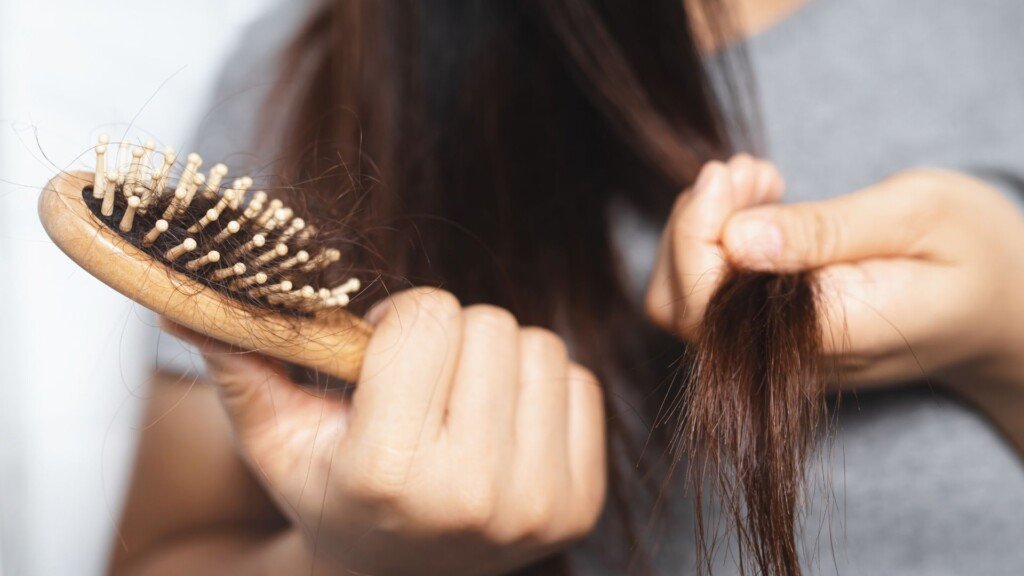
Why Does Hair Shed More in the Fall? Understanding Seasonal Hair Loss
The leaves aren’t the only things falling this time of year.
As summer turns to fall, if you’ve noticed more hair than usual in your brush, shower drain or on your clothes you may be experiencing something researchers have documented for years: seasonal hair shedding.
While it can certainly be alarming, increased shedding in late summer and fall doesn’t necessarily mean you’re suddenly developing permanent hair loss. There’s good evidence that hair shedding can increase during late summer and early fall in both women and men. Like leaves on a tree, hair naturally moves through a growth, resting and shedding cycle with what research suggests can be a seasonal rhythm.
The good news? Fall can also be an ideal time to take a closer look at your hair health and establish a comprehensive hair growth regimen.
Is It Normal to Lose More Hair in the Fall?
That extra hair you’re noticing when the leaves turn may not be just in your mind.
One study examined hair-growth patterns in 823 healthy women over six years. Researchers found a clear annual pattern, with the highest proportion of hairs entering the telogen—or resting—phase during the summer. This is when active growth stops but the hair remains in the follicle. These resting hairs will shed in the next stage (exogen), which explains why many will see more shedding as the season shifts into autumn.
Research involving men has found a similar pattern. In one study, the percentage of scalp hairs actively growing declined to its lowest point in September, while shedding peaked around August and September.
“It’s a natural cycle that we now know for most of us isn’t just part of your imagination,” said Dr. Sam Muala, a board-certified physician specializing in hair loss. “Seeing more hair in the shower or on your brush in the fall can be alarming, but increased seasonal shedding is a real phenomenon but, for many people, is temporary. The important thing is to pay attention to whether that shedding subsides or if you’re seeing continued thinning over time. Persistent changes in hair density may be a sign that something more than seasonal shedding is occurring.”
Why Does Seasonal Hair Shedding Happen?
To understand fall shedding, it helps to understand the basic hair-growth cycle.
Each hair follicle moves independently through several stages, including:
- Anagen: The active growth phase, when the hair continues to grow.
- Catagen: A short transitional phase as active growth ends.
- Telogen: The resting phase.
- Exogen: The stage when the old hair is released and sheds, allowing the cycle to continue.
Research has found that a greater proportion of scalp hairs may enter the telogen phase during summer, followed by increased shedding around late summer and fall.
Scientists don’t completely understand why this seasonal rhythm occurs. It may represent an evolutionary or biological response to changing seasons, daylight or other environmental factors.
What’s important is that seasonal shedding is generally temporary.
How Much Hair Shedding Is Normal?
According to the American Academy of Dermatology, it’s normal to shed between 50 to 100 hairs per day as part of a follicle’s natural growth cycle. Temporary excessive shedding can also occur for reasons completely unrelated to the seasons such as illness, significant weight loss, childbirth, surgery, fever, hormonal changes and prolonged stress.
The upshot is that noticing more hair in the shower doesn’t automatically mean you have genetic hair loss, but things like seasonal shedding can make existing hair loss more noticeable. In short, if you’re already experiencing thinning hair, any further reduction in density can dramatically affect how your hair looks and behaves when you try to comb or style it.
Seasonal Shedding or Hair Loss? Know the Difference
An important question is whether you’re experiencing temporary shedding or ongoing hair loss.
Seasonal shedding generally resolves itself as the hair cycle progresses. Genetic hair loss—androgenetic alopecia—is different. Genetic hair loss is progressive so, without treatment, it simply continues to reduce hair count and density over time.
Men typically notice this in a receding hairline, thinning at the crown or both. Women commonly notice widening of the part or more diffuse thinning behind the hairline across the top of the scalp.
If you’re experiencing significant shedding, rapidly progressing thinning, bald patches, scalp irritation or hair loss that continues well beyond the seasonal period, it’s a good idea to speak with a dermatologist or other qualified healthcare professional.
What Can You Do About Thinning Hair This Fall?
Whether you’ve simply become more aware of your hair because of seasonal shedding or you’re dealing with genetic hair loss, fall is a good time to establish a consistent hair-health routine.
Rather than relying on a single product, GroWell offers a complete hair growth and hair care regimen designed to support healthier, fuller-looking hair from multiple directions.
1. Support Hair Growth With Red Light Therapy
The GroWell Hair Growth Caps FDA-cleared for men and women with genetic hair loss and provides a drug-free, non-invasive option that can easily become part of your regular routine. It uses low-level light therapy (LLLT), sometimes called red light therapy, to deliver targeted light energy to the scalp that stimulates the follicles to improve their function and productivity. The proprietary light diode technology in the GroWell caps is scientifically to regrow hair. 100% of treated participants regrew hair in double-blind, placebo-controlled studies that were published in the prestigious medical journal Lasers In Surgery and Medicine, the official journal of the American Society for Laser Medicine & Surgery.
The GroWell Cap’s removable laser and LED light panel can be worn inside the included soft cap or placed inside many of your favorite hats, making treatments easy, comfortable and discreet.
2. Consider Minoxidil for Genetic Hair Loss
For people with hereditary hair loss, topical minoxidil is one of the most established treatment options available. Minoxidil is FDA-approved for treating both male and female pattern hair loss.
GroWell offers 5% Minoxidil for Men and 2% Minoxidil for Women, making it easy to incorporate topical treatment into a broader hair growth regimen.
What shouldn’t be ignored is the potential benefit of combining approaches in what’s known as “treatment stacking” to get the benefits each option provides. Research has found that low-level light therapy and minoxidil can each support hair growth, and combining the two can produce better results than either treatment used alone.
3. Give Your Hair Nutritional Support
Healthy hair growth also depends on having the nutrients your body needs.
Supplements shouldn’t be viewed as a substitute for diagnosing an underlying cause of hair loss. However, they can complement a broader hair-health routine by providing nutritional support so hair has everything it needs to grow its best.
GroWell Hair Growth Supplements for Men and Hair Growth Supplements for Women are formulated with ingredients selected to support healthy hair and overall hair wellness.
4. Treat Existing Hair Gently
Your fall routine isn’t only about stimulating new growth. Protecting the hair you already have matters, too.
Avoid excessive heat, harsh chemical treatments and hairstyles that continually pull tightly on the hair. Choose hair-care products designed to cleanse and condition without unnecessary stress on fragile or thinning hair.
GroWell’s Restore Shampoo and Repair Conditioner are designed to complement a complete hair-health regimen while helping hair look and feel its best.
Turn Fall Shedding Into a Reason to Focus on Hair Health
Seeing extra strands of hair in the shower or on your brush this fall doesn’t necessarily mean you’re suddenly losing your hair. Research indicates that human hair growth and shedding can follow a seasonal rhythm, with increased shedding commonly occurring around late summer and early fall.
That said, it’s also worth paying attention to what your hair might be telling you.
If thinning continues, becomes progressively more noticeable or appears consistent with genetic hair loss, taking action early can make a big difference. A comprehensive regimen incorporating GroWell red light therapy, minoxidil, nutritional support and quality hair care gives you multiple ways to support your hair and scalp for the best results possible.
Don’t just count the hairs you’re losing this fall. Start focusing on the ones you want to grow.
Frequently Asked Questions About Fall Hair Shedding
Hair naturally cycles through growth, transition, resting and shedding phases. Research suggests that more hairs may enter the resting phase during summer, leading to increased shedding in late summer and fall.
Yes, some people experience increased seasonal hair shedding during late summer and fall. This is typically temporary. However, continued or significant thinning may indicate another cause, including genetic hair loss.
Seasonal shedding is generally temporary and may involve increased hair fall across the scalp. Genetic hair loss tends to be progressive. Men may notice a receding hairline or thinning crown, while women may notice a widening part or reduced density across the top of the scalp.
A comprehensive approach can include gentle hair care, good nutrition and proven hair-growth treatments when appropriate. For people with genetic hair loss, options such as low-level light therapy (red light therapy) and topical minoxidil may help support hair regrowth. GroWell offers red light therapy, minoxidil, hair health supplements, shampoo and conditioner that can be incorporated into a complete hair growth and hair care regimen.
Consider talking with a dermatologist or healthcare professional if shedding is severe, continues for several months, causes noticeable thinning or bald patches, or is accompanied by scalp irritation or other symptoms.