

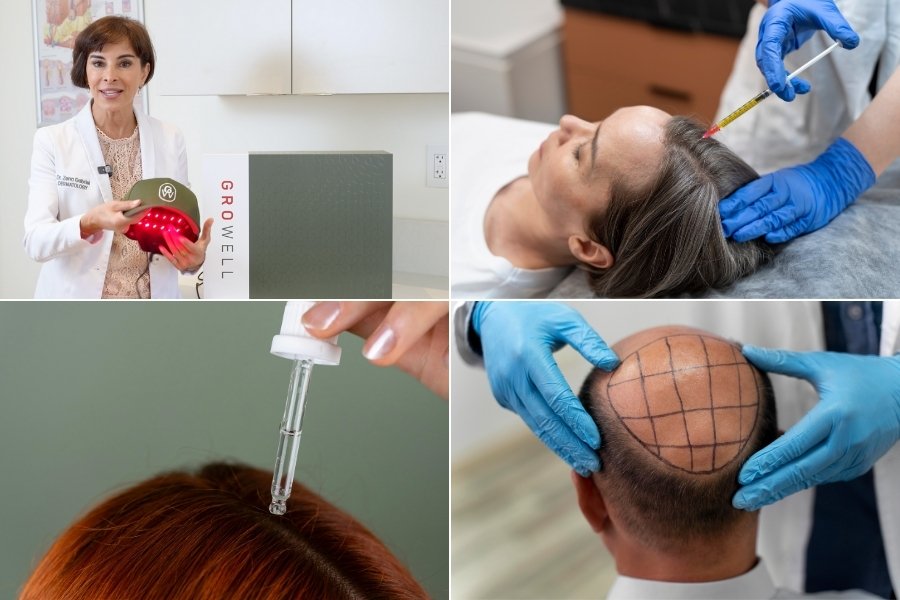
Red Light Therapy for Hair Loss: How It Works and What to Expect
Red light therapy has become one of the most talked-about non-invasive options for thinning hair, and for good reason. It’s drug-free, clinically studied, and simple enough to use at home. This guide explains what red light therapy for hair loss actually is, how it stimulates hair growth, what results to expect, and how it fits alongside other treatments.
What Is Red Light Therapy for Hair Loss?
Red light therapy (RLT), also known as low-level light therapy (LLLT) and medically referred to as photobiomodulation, uses specific wavelengths of red light to stimulate activity in the hair follicles. It’s the same underlying technology that has been used in clinics, spas and doctors’ offices for decades to support thinning hair.
Unlike medications, red light therapy works without drugs and has no known systemic side effects. It doesn’t replace the body’s natural processes; it supports them, by encouraging follicles to work more productively.
How Does Red Light Therapy Stimulate Hair Growth?
Hair follicles are living, metabolically active structures. As they thin or become dormant, they need more support to stay productive. Red light therapy delivers a measured “dose” of nonthermal red light at the wavelength shown to stimulate follicles — increasing blood flow to the scalp and encouraging follicles to spend more time in their active growth phase.
In other words, it helps follicles do what they’re already meant to do: grow hair. Because the light is nonthermal, the treatment is gentle on the scalp, which is why it can be used consistently at home.
It’s worth noting that more isn’t always better. Over-powering the scalp with excessive light or treating too frequently can actually work against regrowth. The most effective protocols deliver the optimal dose and build in rest days, which is why GroWell recommends use every other day rather than daily.
What Results Can You Expect and How Long Does It Take?
Red light therapy is not an overnight fix. Hair grows on a cycle, and meaningful change takes consistency over months rather than weeks.
Most people begin to notice changes within three to six months of regular use, with more visible improvement over six to twelve months. In two peer-reviewed clinical trials conducted by Apira Science, one for men and one for women, 100% of treated participants regrew hair, showing 35% more hair in men and 37% more hair in women over 16 weeks.
The single biggest factor in results is consistency. Sticking to the recommended schedule is what allows follicles to respond over time. You can see real before-and-after hair growth results from GroWell users on our Results page, and learn more about how the hair growth cycle works to set realistic expectations.
Is Red Light Therapy Safe?
Yes. Low-level light therapy has no known side effects and has been a safe, routine treatment for thinning hair for decades. It’s drug-free, non-invasive, and requires no downtime, it poses roughly the same overall risk as a table lamp.
GroWell uses FDA-cleared red light technology, which means the device has been reviewed for safety and effectiveness rather than sold as an unregulated beauty gadget. You can read more about what it means to be FDA-cleared for hair growth and why it matters.
Red Light Therapy as Part of a Combination Hair Loss Plan
Red light therapy is highly effective on its own, but it also works well as the connective foundation of a broader plan. Many hair restoration specialists favour a combination approach that layers medical therapy, in-office procedures and supportive at-home care — and red light therapy fits naturally into nearly every option because it’s non-invasive, drug-free and compatible with other treatments.
Hair follicles thin due to multiple overlapping factors, rarely a single trigger. A combination plan lets clinicians address those factors together rather than in isolation. A well-designed plan may aim to slow or stabilise ongoing hair loss, reactivate viable follicles, support recovery from in-office procedures, and protect long-term results through maintenance.
“Hair loss treatment works best when we support the follicle from multiple angles,” said Dr. Samer Muala, a hair restoration physician and founder of HimAndHair.com. “Red light therapy fits well into combination hair loss care because it helps improve the scalp environment and follicle function, which can enhance the overall response to therapies like minoxidil, finasteride, and PRP.”
Red Light Therapy + Minoxidil
Minoxidil is commonly used to stimulate hair growth and extend the growth phase of the hair cycle. While effective for many people, it requires long-term consistency and can sometimes cause scalp irritation. Red light therapy is often introduced alongside minoxidil to reinforce follicle activity and provide an additional non-chemical form of support.
“Minoxidil can be a valuable growth stimulant, but results depend heavily on consistency,” said Dr. Muala. “RLT can complement minoxidil by supporting follicle metabolism and scalp health, giving patients another way to reinforce their treatment plan.”
Red Light Therapy + Finasteride
Finasteride is often used to address the hormonal component of androgenetic alopecia by reducing DHT-related follicle miniaturisation. While it plays a key role in slowing progression, it does not directly stimulate growth. Red light therapy is frequently layered into these plans to support follicle performance and overall scalp health.
“Finasteride helps reduce a major cause of pattern hair loss, but it’s only one piece of the puzzle,” said Dr. Muala. “Red light therapy can be a useful adjunct by supporting follicle function while medical therapy addresses the hormonal driver.”
Red Light Therapy + PRP
Platelet-rich plasma (PRP) therapy delivers concentrated growth factors to the scalp during scheduled office visits. PRP can be highly effective, but results develop gradually and typically require a series of treatments. Red light therapy is often used between PRP sessions to maintain continuity and reinforce scalp health during the regenerative process.
“PRP treatments are spaced out over time,” said Dr. Muala. “Having a supportive at-home therapy like RLT can help patients stay engaged in their care and support the scalp between visits.”
Spironolactone for Hair Loss and Red Light Therapy: Does it Work for Women?
For women experiencing hair loss related to hormonal changes, combining red light therapy with spironolactone may provide even greater benefits than either treatment alone. Spironolactone is a prescription medication that works by blocking the effects of androgens—hormones that can contribute to female pattern hair loss—helping to slow or reduce ongoing follicle miniaturization.
Red light therapy complements this approach by stimulating the hair follicles directly, increasing cellular energy production, improving blood flow to the scalp, and encouraging healthier hair growth. Because the two treatments work through different mechanisms, they are often recommended together by dermatologists and hair restoration specialists as part of a comprehensive treatment plan.
While spironolactone (for hair loss) helps address one of the underlying causes of hair thinning, red light therapy supports stronger, thicker regrowth and may improve overall treatment outcomes.
As with any prescription medication, spironolactone should only be taken under the guidance of a qualified healthcare provider, but when paired with an FDA-cleared red light therapy device like GroWell, it can be an effective, drug-plus-device strategy for many women seeking fuller, healthier hair.
Red Light Therapy Before and After a Hair Transplant
Hair transplantation redistributes permanent follicles, but surgical success depends heavily on healing, scalp condition and the health of surrounding native hair. Red light therapy is increasingly used as a supportive tool both before and after transplantation, always under physician guidance. Post-operative timing and use should always follow the surgeon’s protocol.
Why Physicians Choose GroWell for Red Light Therapy
When physicians recommend an at-home red light therapy device, they look beyond marketing claims. Comfort, consistency, reliability and adherence matter just as much as the technology itself. GroWell red light therapy caps, developed by Apira Science, are designed specifically to integrate into physician-guided hair restoration plans — or to be used confidently as a standalone treatment.
“We built GroWell with a science-first approach to support, not replace, clinical care,” said Frank DeMartin, CEO of Apira Science. “Our focus has always been on creating a red light therapy device that physicians feel confident recommending. They come to us because they trust the product and the 20 years of real science behind it.”
“Red light therapy for hair loss works and the GroWell cap is my favorite,” said Dr. Zena Gabriel, a board-certified dermatologist. “It’s safe, FDA-cleared and backed by 20 years of science. And that matters to me, because I’m a doctor.”
Frequently Asked Questions About Combining Red Light Therapy With Other Hair Loss Treatments
How does red light therapy work for hair loss?
Red light therapy (also called low-level light therapy or LLLT) delivers non-thermal red light at a wavelength shown to stimulate hair follicles. It increases blood flow to the scalp and supports follicle activity, helping follicles work more productively to grow hair.
Is red light therapy effective for hair growth on its own?
Yes. Red light therapy is effective on its own as a non-invasive, drug-free option. In two clinical trials conducted by Apira Science — one for women and one for men — 100% of treated participants regrew hair, with 35% more hair in men and 37% more in women over 16 weeks. It’s also highly effective as part of a physician-guided combination plan.
How long does red light therapy take to work for hair?
Most people begin to notice changes within three to six months of consistent use, with more visible improvement over six to twelve months. Consistency is the key factor in hair growth results.
Is red light therapy safe for the scalp?
Yes. Low-level light therapy has no known side effects and has been a routine treatment for thinning hair in clinics for decades. GroWell uses FDA-cleared LLLT and poses roughly the same overall risk as a table lamp.
Can red light therapy be used with minoxidil or finasteride?
Yes. Red light therapy works through a different, non-hormonal mechanism and is frequently used alongside both. Minoxidil and finasteride address growth stimulation and the hormonal driver respectively, while red light therapy supports the scalp environment and follicle function. Many physicians recommend using them together.
Can red light therapy improve PRP hair treatment results?
Red light therapy is commonly used in conjunction with PRP (platelet-rich plasma) therapy. PRP treatments are performed periodically, while red light therapy can be used consistently at home between sessions to help support scalp health and maintain treatment momentum.
Is Spironolactone Effective for Hair Loss?
Spironolactone is a prescription-only medication originally developed to treat high blood pressure and fluid retention. It’s increasingly used off-label to treat female pattern hair loss because of its anti-androgen properties — it works by blocking androgen receptors and reducing testosterone production, which can help slow hair thinning linked to hormonal imbalances.
It’s typically prescribed for women rather than men, as it can lower testosterone levels and isn’t usually suitable for use in males. Common side effects include dizziness, fatigue, and menstrual irregularities, and it’s not recommended during pregnancy.
Because spironolactone is a prescription drug, it should only be taken under medical supervision. If you’re exploring hormonal causes of hair thinning, it’s worth discussing spironolactone with a GP or dermatologist, who can advise whether it’s appropriate alongside other approaches such as red light therapy or topical treatments.
Can I use red light therapy before or after a hair transplant?
Many hair restoration surgeons incorporate red light therapy into pre- and post-transplant care plans. Before surgery, it may help support scalp conditioning. After surgery, it may support recovery and follicle function—but timing and use should always follow your surgeon’s specific post-operative instructions.
Is red light therapy effective on its own?
Yes, red light therapy is beneficial on its own for most individuals seeking a non-invasive, drug-free treatment option. It offers extremely strong efficacy, with true science backing its effectiveness. In two studies conducted by Apira Science, one for women and one for me, 100% off treated participants regrew hair. However, it is also highly effective when used as part of a physician-guided combination approach that may include medical therapy or in-office procedures, depending on the cause and severity of hair loss.
How long does it take to see results with a combination hair loss plan?
Hair growth results vary based on the individual and the treatments used. Many patients begin to notice changes within three to six months, with more visible improvements over six to twelve months. Consistency and adherence to the full treatment plan are key factors in success.